
TruePointe Horizon Blog Space
At my core, I’m a builder. Over the course of my career, I’ve had the opportunity to participate in greenfield start-ups, expansions, and M&A work totaling more than $1B in project value—across multiple industries and organizational sizes. I’ve led in the non-profit space, large global organizations, and PE-backed firms, building HR infrastructures that scale and adapt as business demands change. Along the way, I’ve learned that sustainable growth is never just about strategy—it’s about people, leadership, and culture.
My approach to coaching and consulting is focused on culture, values-based behaviors, and creating the conditions where people feel engaged and proud to be part of something bigger than their job title. While my career path has been varied, the principles that drive healthy leadership and strong cultures are remarkably consistent.
This blog is where I’ll share the ideas, tools, and practical lessons I use with leaders and organizations to achieve success that matters—through customized coaching, training, and consulting.
If you’d like to explore working together, reach out to schedule a discovery call.

What Employee Engagement Tells You About Leadership Behavior
Gallup's research is clear: managers explain roughly 70% of the variance in team engagement. Yet most organizations quote that number without giving managers a specific list of behaviors to improve. This post names six manager-controlled drivers of engagement, from clarity of expectations to the experience of being heard, and shows how the 21st Century Leadership Program turns that insight into action.

The Traits That Drive Success
Start-ups, scaling and / or boot-strapped businesses always face times of challenges. What are some of the traits that we see in other businesses that face the challenges and continue to build?
The Purpose Paradox:
Why Most Companies Have It… But Don't Use It
March 19, 2026
Purpose Was Never Meant to Stand Alone
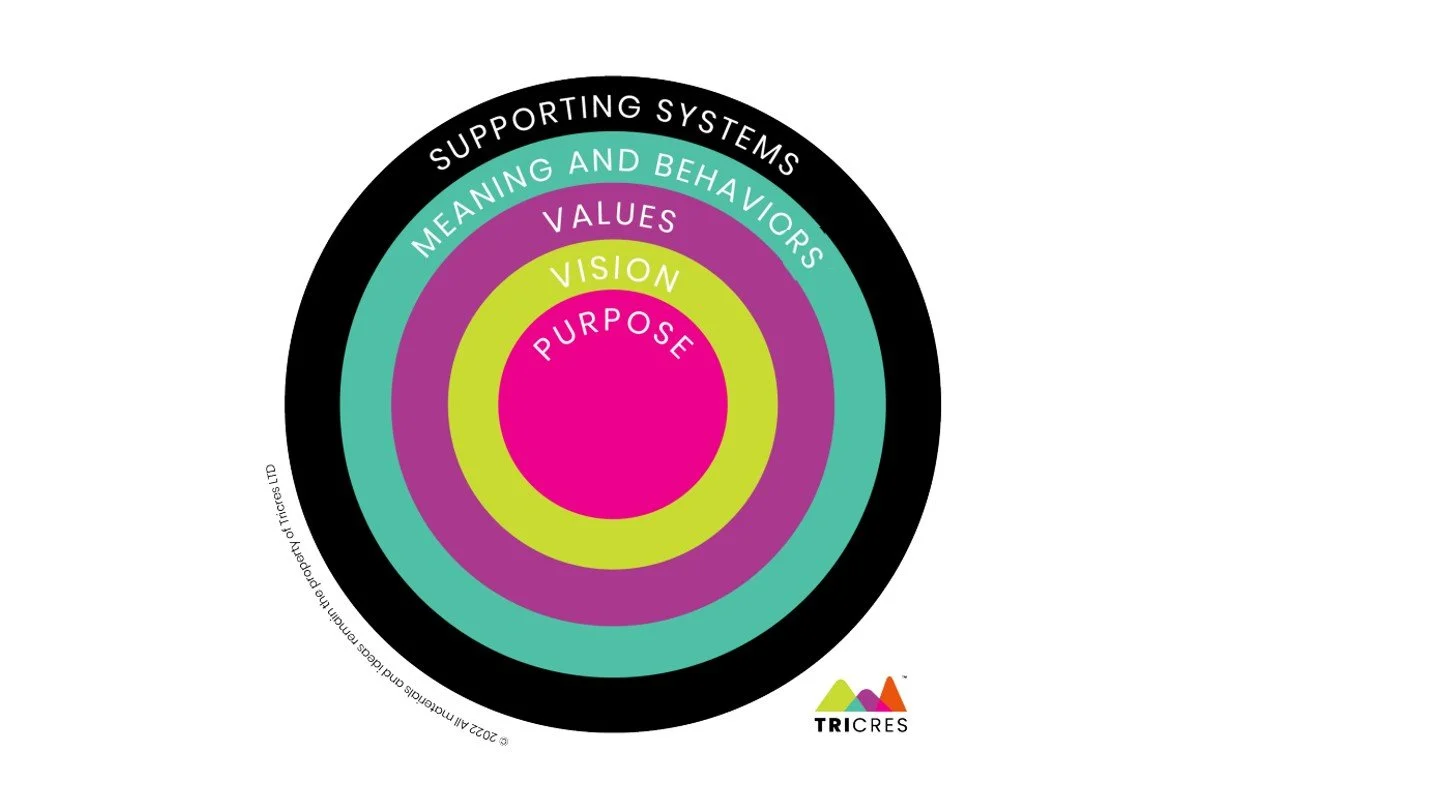
The Tricres framework that I use with clients, a proven methodology, treats Purpose not as a standalone statement, but as the innermost layer of a culture architecture that builds outward.
Think of it this way:
Purpose is your core reason for existing. The fundamental why that drives the business. It answers the question: what would be lost if this organization disappeared tomorrow? When it's clearly defined, it becomes the reference point for decisions, especially in uncertainty.
Vision gives that purpose direction. It answers: where are we going? A well-articulated vision paints a clear picture of the future you're building toward. Specific enough to be motivating, honest enough to be credible. It converts "why we exist" into "what we're building."
Values define how you'll get there. Not words on a wall, but behavioral standards that are observable, repeatable actions that should show up in meaningful interactions, every decision, every hire. As I've written before: values should be verbs. If you can't describe what a value looks like in practice you’re missing to most clearly define your cultural expectations. Values show up in what you do and what you expect of others.
These three layers — Purpose, Vision, Values — build on each other from the inside out. And together, they produce two things that most organizations desperately need: Meaning and Behaviors. Meaning is what connects individual work to something larger. Behaviors are what translate culture from concept into daily reality.
When all of this is integrated and linked to your supporting systems: how you hire, how you develop people, how you measure performance, how you communicate. When culture stops being a program and starts being an operating system, you unlock the potential of the organization.
The Shift That Changes Everything
Here's what I've seen when organizations do this well:
Decision-making gets faster. When your purpose is clear and your values are defined as behaviors, you don't have to debate every gray-area situation from scratch. The framework already answers most of the questions.
Alignment improves, across levels and departments. When people know why the organization exists, where it's headed, and how it expects them to show up, they can move in the same direction without requiring constant top-down direction.
Change becomes less disruptive. When the foundation is strong, change doesn't destabilize the whole structure. You can shift what you're doing without losing who you are.
And perhaps most importantly: engagement increases. People want to be part of something bigger than their daily task. When purpose is real, when it lives in the work, not just on the website, they feel that. And they show up differently.
A Reflection Worth Having
If you're a business owner or leader, here are three honest questions to sit with:
1. Is your purpose actually guiding decisions? Not ceremonially. Operationally. When things get hard, do people reach for the purpose statement as a tool, or does it collect dust while instinct takes over?
2. Are your values defined as behaviors and embedded into leadership expectations? Can someone on your team tell you specifically what "integrity" or "collaboration" looks like on a Tuesday morning when things aren't going well? If the answer is vague, the value isn't embedded yet.
3. Are your systems aligned with your stated culture? How you hire, recognize, develop, and promote people tells the truth about your culture… even when your words say something different.
If any of those questions landed with some tension, that's actually a good sign. It means there's clarity available that you haven't accessed yet.
Purpose Is the Foundation. Not the Finish Line.
The organizations I've seen thrive, with a culture that drive success are the ones that treat Purpose, Vision, and Values as the foundation for growth, not the output of an offsite or a campaign. They define it, integrate it, embed it, model it, and protect it. They use it.
If you've done the work to define your purpose but it isn't driving your culture or your results, the gap isn't in the statement. It's in the architecture around it. It’s lacking leadership intention.
That's exactly the kind of work I love doing with clients. It's closer than you think.
I'd love to hear where you are in this journey. Have you defined your purpose and found it hard to activate? Or have you seen it work the way it's supposed to? Drop a comment or reach out — I'd genuinely enjoy the conversation.
When purpose is documentation instead of living as the guiding behaviors and decisions, the company is missing the opportunity to drive culture as a foundation for success. Here's how to change that.
I've had a version of the same conversation more times than I care to count.
A leader; smart, committed, genuinely passionate about their business, tells me they have a purpose statement. Sometimes it's framed and hanging in the lobby. Sometimes it's on the website, printed on onboarding materials or the employee handbook, and referenced in the all-hands meeting every January. They worked hard on it. They believe in it.
And then I ask: "When was the last time your team made a decision by going back to your purpose?"
Long pause.
That pause is the enigma of why most organizations have a stated purpose, but very few actually use it. It sits above the work instead of underneath it, inspiring as a concept, invisible as a tool. It’s the Purpose Paradox.
Why Purpose Gets Stranded
Here's what usually happens. A leadership team invests real time and energy into defining their "why." They craft something meaningful, communicate it with enthusiasm, and then... return to the business of running the business. Purpose gets filed under "culture," and forgotten. After all, every business has a culture, right? But, if leaders don’t lead culture with intention and on purpose, It’s not going to drive the results that they want.
The result? People can recite the purpose statement (sometimes). But when a tough decision lands on the table no one reaches for it. When it’s time to make a decision on a difficult hire, a strategic pivot, a culture conflict, they make a decision based in the moment. They reach for precedent, or instinct, consensus, or whoever speaks the loudest. But not tethered to Purpose.
This isn't a problem with the purpose. It’s not a values problem. It's a problem with focus and intention.
Purpose only works when it's connected to everything else: the direction you're heading, the behaviors you expect, and the systems that support all of it. Without that connection, purpose is just words.
Talent on Purpose: The Agility Imperative
February 26, 2026

Your Company’s Purpose serves as a beacon that guides decisions in times of uncertainty.
Change Is the New Constant
In today’s business landscape, the only thing moving faster than the economy is the pace of change itself. The threat is that organizations anchored to traditional ways of working and traditional ways of thinking (fixed job descriptions, rigid structures, legacy systems) find themselves scrambling when external pressures demand new approaches. The result? Confusion, overwhelm, and missed opportunities.
What most people fail to realize is that this dilemma is not a new one. What’s new is the pace at which external factors are putting pressure on the delivery of goods and services. With the rapid deployment of artificial intelligence (AI) across virtually every aspect of our professional and personal lives, expectations are changing more rapidly and more dramatically than ever before. The bandwidth that “wait and see” is gone.
What’s the easy answer? In reality, there isn’t one. There is no “one-size-fits-all” solution, but there are some things that leaders can look to leverage.
I talk A LOT about culture, and that a strong culture can be a strategic advantage for a business. One of the reasons is because culture, when done correctly, helps build clarity within the organization. I’ll expand on these topics more in the coming weeks, but here are a couple of foundational principles that are important in this context.
Purpose Matters:
One of the key aspects of building a culture as a foundation for success is to make sure that there is a clear purpose that is driving the business. Why does the business exist? What is the “north star” that guides the decisions?
Defining and communicating the company’s overall purpose is a cornerstone for establishing clarity. It’s the call to something bigger that pulls the team together and engages them to succeed together. When there is chaos and uncertainty, having a clearly articulated purpose is one of the key cornerstones for weathering the storm.
Adapting to what’s next:
For years, “learning agility” has been hailed as a must-have for leaders and high potentials. But today, it’s not only a critical competency… it’s a survival skill. Adaptive agility is becoming more and more critical as the pace and magnitude of change continues to increase. Leaders need to get comfortable with being out of their comfort zone.
Leaders that can’t or won’t adapt will have an increasingly short runway in the future. Today’s leaders must be agile, able to analyze information quickly, correlate it to real-world circumstances, and adjust at the speed of business. But it’s not just about the leader, and there’s increasing pressure to implement systems and structures that flex and adapt, too.
What’s the pressure release valve? Knowing, understanding, and building on the Purpose of the business. When the pressure is the greatest, finding the clarity of purpose and tethering your decisions to that purpose makes all the difference.
The talent challenge ahead:
As an organizational culture consultant, I see firsthand how leadership development and talent management strategy must evolve to keep pace with change. The way we lead will need to become more fluid for the future.
The age of rigid job descriptions is over. The only line that matters? “Other duties as assigned.” Previous job titles and a long list of accomplishments are becoming increasingly less important. The future will be built on transferable skills, learning agility, adaptive agility, and the willingness to grow into the unknown.
There is both art and science to Organizational Design. In today’s business environment, it’s more critical than ever that OD build adaptability into the organizational structure. Competency mapping for the future will be filled with more question marks than anyone will be comfortable with. Leaders can partially offset this uncomfortable reality by ensuring that they are building culture from the inside out.
If you’re hiring and developing only for today’s needs, you’re already behind. The most successful organizations invest in developing adaptable skill sets and dynamic competency profiles. They understand that future-ready talent is the foundation for sustainable growth.
Actionable Takeaway: Start by making sure that your Purpose is well defined and well-articulated; and is central in every decision-making conversation. Then, reassess your talent strategy. Ask: Are you building a workforce for today, or for what’s coming next? The organizations thriving tomorrow will embrace agility, invest in future skills, and create structures that support continuous learning and adaptation.
Want to talk about it? Need some help making sense of it? Let’s connect!
#Culture Catalyst #LeadershipDevelopment #OrganizationalCulture #ChangeManagement

The Traits That Drive Success
In every thriving organization, certain traits quietly shape the path to lasting success.
I was working with a founder-led company that wanted to define competencies and look at building a competency-based talent development program for the future. I spent time talking to a cross-section of people—long-tenured, short-tenured, high performers, contributors, across different departments, different levels within the organization, and as demographically diverse as possible.
While some of the questions were tailored to the departments and jobs held by the individual, there were a handful of questions that I asked everyone. One question produced the most interesting results:
“When you think about the people who have been the most successful and made the most significant contributions, whether they still work here or not; what traits did they show that contributed to their success? What did they do well? What made them stand out?”
Two common responses that came up repeatedly: persistence and problem solving. As I dug deeper into what had driven success in the business over the years, it became obvious that the ability to solve problems and the ability to bounce back had developed as part of the cultural norm of the business. Those behaviors were recognized and rewarded. Even if the founder and leaders didn’t necessarily recognize that they were actively shaping the culture, that’s exactly what they were doing.
Problem Solving: The Power of Perspective
Problem solving isn’t just about fixing what’s broken – it’s about seeing challenges as opportunities to innovate and grow. The most impactful contributors consistently looked at obstacles from multiple angles, inviting input and exploring options others might overlook. They didn’t settle for the first answer. Instead, they asked better questions, reframed the problem, and collaborated to find solutions that moved the business forward.
Relying on “doing what you’ve always done” does not assure future success. Creativity is an important factor, but the willingness to try new things – to take risks, and make the necessary adjustments to find success often gets lost in environments that are stable grounded in routine. Growth often requires a breakout.
This mindset doesn’t just solve today’s problems; it shapes a culture where curiosity and continuous improvement become second nature. When leaders model this approach, teams learn that it’s not about having all the answers, but about being willing to find them together.
Persistence: Bouncing Back, Moving Forward
Persistence is the quiet engine behind every breakthrough. The people who made the biggest impact in this organization weren’t the ones who never failed; they were the ones who refused to give up. Setbacks, roadblocks, and tough feedback didn’t stop them—they adapted, learned, and kept moving forward.
Over time, this resilience became contagious. It encouraged others to take risks, share ideas, and support each other through challenges. Many long-tenured employees shared stories where stopping was not an option and the people who refused to stop. For them, the drive to keep pushing forward, find a way around, or do whatever it took to move beyond became a sort of battle cry.
The result? A workplace where growth is possible, even in the face of uncertainty. It was a place where success was just around the corner – somehow, some way!
Building a Mindset for Success
When problem solving and persistence become part of the culture and part of the belief system, organizations unlock the potential to thrive through change. These aren’t just traits – they’re mindsets that can be developed, practiced, and celebrated. The ability to shift perspectives, tackle problems creatively, and keep going when things get tough is what separates good teams from great ones.
Are you ready to build a culture where success is driven by persistence and creative problem solving? Coaching can help, and we would be honored to partner with you through the journey. Leaders and teams can learn to capture these mindsets – unlocking new possibilities, stronger results, and a more resilient, empowered organization. Let’s work together to turn challenges into opportunities and create success that truly matters.

Shades of Green
Moments of clarity on the importance of balance
Discovery often hides in plain sight – sometimes revealed in the most unexpected ways.
My commute for work at the job I had held for just a couple of months was about 45 minutes each way. I used that time in the morning to map out my day and slowly get myself going. The afternoon drive was the time when I could decompress so that, by the time I got home, the tension of the day had evaporated.
I was on the interstate most of the time. There typically was not a lot of traffic, so I didn’t have to deal with the frustrations that I had dealt with commuting with my previous job. I traded commuting through the heart of the city, via one of the busiest arteries in the area, for commuting through the countryside, even crossing through a National Forest. It was in that stretch of forest one morning when I looked onto the mountainside and realized that nature was spotted with too many shades of green to count.
The leaves of the many different tree species, the variety of grasses and underbrush, the morning dew, and shifting clouds – all combined to create more shades of green that I could count. It was stunning. How is it possible that I have never noticed this before? How?
I suppose I could have noticed a million times before, yet I don’t think that I had ever consciously thought about it. I couldn’t believe it. How was it possible? I had gone from listening quietly to sports podcast and legitimately thinking about nothing at all, to my mind swirling. I couldn’t stop thinking about it. How often do we miss the extraordinary in the ordinary?
Admittedly, that description is a little over-the-top… but it was such a shock to my system, there’s really no way to describe it adequately. In those moments of awe, I was experiencing a self-discovery that I wasn’t expecting. I had spent more than a decade so distracted by my work, I was missing the joys of life.
Now, thinking about shades of green has become a mental reminder to slow down and appreciate the things that we take for granted. I realized that I had spent decades immersed in the busy-ness of business, that I had constantly looked past the awe and wonder that surrounded me. I had missed moments – quiet moments, happy moments, moments of gravity, and moments of gratitude because I was focused on things that often times really didn’t matter that much.
Today, if I find myself overwhelmed by all that I need to do but wanting to look out the window to see shades of greens and browns and greys. I know now that looking for the bloom on a mountain laurel bush refreshes and renews my spirit and helps me focus better on the goals I have. Listening to the gentle sound of the creek below my house clears the clutter in my mind, and helps to sharpen my focus.
Taking moments to enjoy and embrace the wonders of life around us is a vital balance to the challenges of our work life. We need the balance for the good of our relationships, our capabilities, and our own health.
What details have you overlooked lately that could refresh your outlook? What is your “shade of green?” Take time to pause today, notice, and let it inspire you today.

From Experience to Impact:
The Story Behind TruePointe Horizon
Clarity. Perspective. Purpose.
When people ask why I launched TruePointe Horizon—a coaching and consulting practice built for today’s volatile, crowded market—I always return to a core belief: great leadership demands both clarity and perspective.
February 5, 2026
After 35 years in executive roles within high-growth organizations, I’ve seen how easy it is for leaders to get lost in the noise, urgency, and competing priorities. Sustainable growth, I’ve learned, comes from deep listening, building trust, and focusing on the behaviors that drive real outcomes.
My mission? To help leaders cut through the noise and reconnect with their purpose—so they can lead with focus and intention, now and for the long haul.
Why “TruePointe Horizon”? The name signals two things: clarity of direction and progress over time. It’s about creating impact that matters.
TruePointe: The accurate point of aim—the reference point when decisions get noisy, priorities compete, and culture drifts. My coaching promise: help leaders get back to what’s true and essential.
True: Grounded in purpose, values, and integrity. Honest reflection on what’s working—and what isn’t.
Pointe: A clear direction. Focus and alignment—a practical “north star” for decisions and behaviors.
TruePointe is where clarity meets action, enabling leaders to lead intentionally and consistently, not just reactively.
Horizon: The strategic lens guiding decisions and execution. Leaders must manage multiple horizons to reach meaningful outcomes:
Near horizon: Daily habits, execution, leadership behaviors.
Mid horizon: Operating plans, key initiatives, capability-building.
Far horizon: Long-term strategy, mission, and legacy.
Focusing only on the near horizon keeps leaders busy but drifting; focusing only on the far horizon keeps them inspired but stuck. The mid horizon bridges the gap—where priorities become plans, and plans create momentum. TruePointe Horizon helps leaders align all three, so the ultimate destination is reached through intentional, people-first execution.
Purpose Behind the Name: TruePointe Horizon is more than a business—it’s a commitment to:
Impactful: Driving measurable movement by aligning behaviors, culture, and outcomes.
Optimistic: People-first leadership rooted in compassion, trust, and belief in growth.
Catalyst: Turning insight into new habits, better decisions, and scalable foundations.
My goal is to be a catalyst for positive change—helping leaders clarify their “why,” push through challenges, and build healthier habits that last. When leaders balance clarity and perspective, they build foundations for growth that truly matters.
Curious about your own leadership journey? Let’s connect and explore how clarity and perspective can drive your next chapter.
January 28, 2026
Lessons From a Father’s Legacy
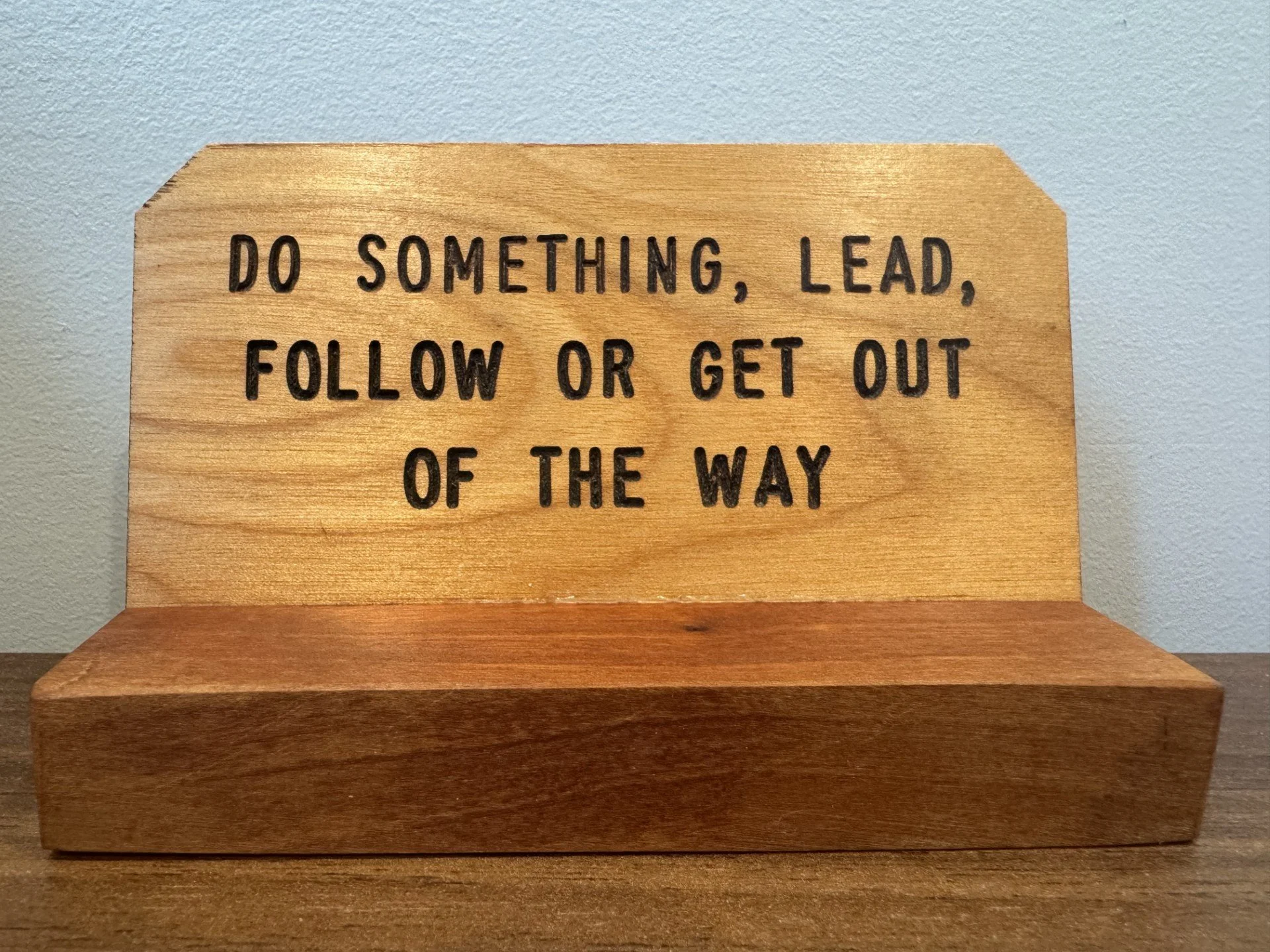
Today would have been my dad’s birthday – one of those days each year where I tend to be more sentimental and introspective. The small wooden placard that sat on his desk at work for years now sits on my office windowsill and has been a catalyst for a flood of memories lately. I honestly have no idea where it came from, but it somehow encapsulates so much about who he was:
“DO SOMETHING, LEAD, FOLLOW OR GET OUT OF THE WAY.”
That phrase is now a daily reminder of the lessons he lived by, and the values he passed down to me.
“DO SOMETHING”
My dad was not a man that allowed himself much idle time. He was always doing something, and as soon as one project was finished, there were others waiting.
He would often say “you’ll never get finished if you don’t get started.” It was his version of “a journey of a thousand miles begins with the first step.”
“Doing” often meant helping others. Whether it was doing something to help a family member or friend or making things easier for my mom at home, he worked hard to make things better for those around him.
He was the embodiment of “do it right the first time.” Across many different jobs, attention to detail and quality workmanship were non-negotiable. “Details matter” he would often say, even when it required extra effort.
Takeaway: Action creates momentum. Do it right, or not at all!
“LEAD”
He showed that leaders don’t need titles. Even without a formal role, he still influenced outcomes and those around him by being the right kind of role model for the situation.
He demonstrated leadership through building trust, acting with integrity, following through on commitments, being direct and showing compassion at the same time, and sacrifice personally for the good of the family (both at home and at work).
He was a connector and a harmonizer, able to bring people together and create an environment where everyone would feel seen, heard and successful.
Takeaway: Leadership is a daily choice, not a job description.
“FOLLOW”
Where there were structure and hierarchy to respect, he did all he could do to help others succeed. His “team first” attitude and commitment to a successful outcome meant he listened and rallied when needed.
He was deeply analytical and humble enough to recognize when someone else’s idea was better than his own. When he could connect the dots logically, he was all in.
He always had an atlas in the car and wasn’t afraid to either stop and ask for directions or take the time to analyze the map for options. “Going with plan B is better than being stalled with plan A,” was his way of showing there’s more than one way to reach your goal.
Takeaway: Sometimes the best move is to listen, adapt, and support the team.
“GET OUT OF THE WAY”
“When you’ve got no business being there, you should leave” was one of the ways that he emphasized the importance of making good decisions.
After I got my Learner’s Permit, he told me “it doesn’t matter how good of a driver you are, if you’re not paying attention to what’s happening around you, you can get hurt in a hurry.” Beyond driving, it was his way of saying that we can’t control everything around us, stay aware and be prepared.
And perhaps the one piece of advice that sums up his legacy: “sometimes you just have to go find the answer.” Success isn’t guaranteed or always easy – but if it matters enough to you, you’ll figure it out.
Takeaway: Progress sometimes means letting go—or seeking new paths.
I’m grateful for the lessons that little placard brings to mind, and even more grateful to have learned them firsthand from my dad.
What words or reminders guide you when you face a crossroads? I’d love to hear your thoughts.
Let’s keep learning from those who shaped us.
January 21, 2026

Why Organizational Culture Matters: The Strategic Multiplier for Business Success


Culture isn’t a “soft” additive or a feel-good extra for business — it’s a strategic enabler. When treated intentionally, culture becomes a multiplier, not a disruptor. But for culture to truly drive outcomes, it must be clearly articulated, consistently reinforced, and deeply engrained. Without clarity and definition, sustainable culture simply doesn’t exist.
One of my favorite (and most repeated) quotes is from Dr. Stephen Covey:
“You can’t talk yourself out of a situation you behaved yourself into.”
If what you say is misaligned with what you do, people will believe what they see — not what they hear.
At the heart of thriving organizations are three essentials: trust, authentic leadership, and unwavering consistency. Culture is built — and broken — by what leaders model and what they allow. It’s not enough to list values; they must be translated into visible, daily behaviors. As Simon Sinek puts it, values should be verbs or action phrases.
Microsoft CEO Satya Nadella sums it up:
“The culture of a company is the sum of the behaviors of all its people.”
Within that context, it’s incumbent on leaders to be proactive—to lead from the front. You get what you allow. You can build the culture you want, or let others build it for you. When you allow behaviors that are misaligned with your values, or fail to define expectations, you risk creating a culture by default—one shaped by the loudest voices, not your vision.
Culture isn’t just slogans or posters on the wall. While those tools can serve as helpful reminders, they’re no substitute for leadership modeling the way and holding everyone — yes, even high performers — accountable to the same standards. Making exceptions for top talent introduces toxic disruption. Misalignment between stated culture and allowed behaviors erodes trust and consistency.
My youth basketball coach always said, “The shortest distance between two points is a straight line.” In business, that straight line should run directly through your culture—not around it. When culture is the foundation for growth, you build efficiency and more predictable outcomes. And when change is needed, you can leverage your culture to reduce friction and build on established success.
Clarity and consistency don’t just drive performance—they fuel engagement. People want to be part of something bigger than themselves. When an organization’s purpose, values, and culture are clearly aligned and communicated, engagement soars and results follow. As Henry Ford famously said:
“If everyone is moving forward together, then success takes care of itself.”
High engagement is one of the surest ways to build the synergy of moving forward in unison. When everyone is driven to achieve the same thing, each task becomes not just “my” responsibility, but “our” responsibility.
The takeaway?
Culture is the engine that drives sustainable success, innovation, and growth. It’s not accidental or ornamental—it’s intentional, actionable, and accountable. When you define it, model it, and protect it, culture becomes your ultimate competitive advantage.
Culture must be intentional and actionable
Leadership modeling is non-negotiable
High employee engagement fuels results
Consistency builds trust and performance
Turning Insight Into Action
As a coach and consultant that often focuses on organizational culture, I work alongside leaders and teams to translate these principles into everyday practice—helping organizations articulate, embed, and protect the cultures that power their success. Whether you’re scaling, navigating change, or seeking to realign your team, the right culture is your greatest asset.
How I help:
Guided Workshops: Define and articulate your business’s Purpose, Vision, and Values.
Culture as a Foundation for Growth: Align culture with people, strategy, and revenue systems.
Employee Engagement: Find the optimal balance where culture feeds engagement—and vice versa.
21st Century Leadership: Develop strategies for self, people, and business leadership, all aligned with your internal systems.
Competency-Based Development: Build talent management systems that reinforce culture-driven behaviors and grow critical skills.
OKRs Made Easy: Define objectives, set tactics, and establish robust accountability systems.
And more—tailored to your unique needs.
Ready to Turn Culture Into Your Competitive Advantage?
Let’s talk about how intentional leadership and practical strategies can move your organization forward.
Schedule a discovery call or connect with me to explore how TruePointe Horizon can help you build a culture that delivers results.
January 14, 2026

Change Management and Culture: A Practical Framework for Leaders!
Change IS hard…most of the time. But here’s the truth we often overlook: when change is for the right reasons and properly managed, it can be exactly what’s needed. Hard things are often worth the effort.
Earlier this week, my wife and I completed the sale of the house that we had called home for more than 25 years. It was the only home that our adult kids remember. My wife worked hard for it to be a place where friends and family felt welcome, and it became the place that kids would come after school (and sometimes stayed). When we put the house on the market, some of those teenagers sent messages celebrating the memories and thanking our family for letting them spend so much time there.
As we pulled out of the drive for the last time, we were flooded with memories. I could almost hear the sound of little feet running across the floor to greet me at the door from the garage when I got home from work. I felt deep gratitude for how we had grown in that space. It had been perfect for that season of our lives, but it was time for a change.
Throughout the change process we faced many challenging moments – moments of doubt (were we doing the right thing), moments of grief (losing what was familiar), moments of uncertainty, and so many more. But it has been worth it. More than anything, we moved to a new place to grow.
As we’ve settled into our new home. There’s much to love, and we’re building new memories. As each day passes we’ve realized that we can grow better in our new space. Ultimately, the change was for the better!
A structured approach to change management is one of the areas I provide support for my clients. One thing that leaders often overlook is the lens through which the rest of the organization will view the mandate of change. Most people begin with one of two questions:
What’s in it for me?
What does it mean to me?
While you don’t have to answer that question for each person individually, you have to acknowledge that those questions are there, and if you ignore that reality, you’re actually creating barriers for yourself. Across years of leading structured change management , I’ve seen the same pattern across restructures, integrations, new systems, and culture shifts: people don’t resist change simply to keep things the same – they resist loss, confusion, uncertainty, and lack of clarity. Managing the change process is the most effective way to increase the likelihood of making forward progress through and immediately following the implementation of your initiative.
While the details of the approach would be customized to your situation, my goal will be to help guide you through the process of creating clarity, enrolling champions (not always structural leaders), defining rationale, communicating, building energy, and driving engagement. If your people see how it will benefit them (and the business), they immediately become engaged in creating success.
Selling our home reminded me of something I’ve seen again and again in organizations: change doesn’t fail because people are unwilling or because it’s a bad idea – it fails because the path feels unclear, the “why” isn’t shared, and the right champions aren’t engaged early.
Good change management doesn’t eliminate all discomfort – but it does reduce confusion and accelerate commitment. If you’re leading a change initiative in 2026 – an integration, a restructure, a new system, or a culture shift – and you want a steady partner to help you execute it well, I would be glad to help. Schedule a discovery call using the link in the header to discuss how we can map the change, identify friction points, and outline a practical path forward.